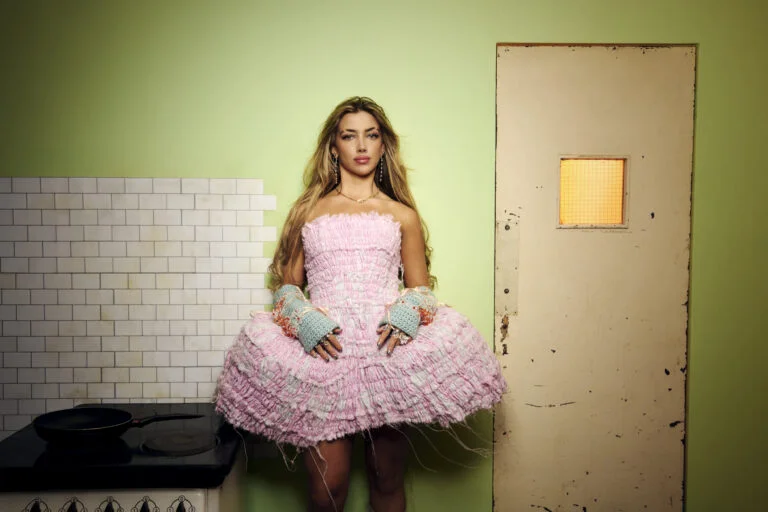
Charlotte Plank is an Australian-British singer, songwriter and producer who has become one of the most interesting emerging voices in modern UK dance music. Her sound combines drum and bass, jungle, indie pop, electronic production and emotionally direct songwriting. Rather than staying inside one genre, Plank has developed a style that moves between intimate pop moments and energetic rave-ready tracks. Her music reflects both her love of traditional songwriting and her fascination with club culture. She began building attention through early releases before gaining wider recognition through collaborations with established electronic artists. Her breakthrough became especially visible when she featured on Rudimental and Vibe Chemistry’s “Dancing Is Healing,” which reached No. 5 on the UK Singles Chart.
Plank’s story is also interesting because her musical background developed from many different influences rather than one narrow scene. Interviews have highlighted her interest in artists ranging from Fleetwood Mac and Sam Fender to The Prodigy, Orbital and Bicep. She has also spoken about the influence of classic jungle and drum and bass, while describing herself primarily as a writer. Her songs often combine energetic production with themes involving relationships, uncertainty, growing up and complicated emotions. This balance has helped her connect with listeners who enjoy dance music but still want meaningful lyrics.
Charlotte Plank’s Early Life and Background
Charlotte Plank was born in Australia and has British connections through her family before growing up in England. Her family background exposed her to club culture from an early age, with reports describing her parents as people who were connected to the acid-house scene. Her father was from Manchester, while her mother also played an important role in introducing her to music. After the family returned to London, Plank became increasingly surrounded by different sounds and musical experiences. This early environment gave her an unusual relationship with dance music because it was not simply something she discovered later in life. It was already part of the cultural world around her.
During her teenage years, Plank explored singing, songwriting and different forms of popular music. She was interested in soul, R&B and alternative music before becoming especially fascinated by drum and bass and jungle. She also wrote poetry and stories, which helped develop the lyrical side of her artistic identity. According to interviews, she studied English literature and music technology while continuing to immerse herself in London’s music culture. These experiences eventually helped her combine traditional songwriting with electronic production. Instead of treating genres as separate categories, she began to see them as materials that could be mixed together creatively.
Charlotte Plank’s Musical Beginnings
Plank’s professional journey began developing seriously during the early 2020s, when she started creating music more independently. During the pandemic lockdown period, she spent time making beats and experimenting with production software such as Logic. This period allowed her to explore different sounds without feeling restricted by conventional genre expectations. She brought together ideas from indie rock, electronic music, pop, jungle and other influences. The result was music that could sound familiar while still having a distinctly modern character. Her early work demonstrated that she was interested not only in performing songs but also in shaping their overall creative direction.
Her early songwriting also showed a willingness to address personal and emotional subjects. The 2022 single “Hate Me” helped introduce her to a wider audience and was followed by “Lost Boys.” The latter explored the difficulties young people can experience while trying to understand themselves and find their place. Plank explained that the song was influenced by people and situations she had encountered, including the feeling of trying to help someone who is not ready to help themselves. This ability to transform observations and personal experiences into dance-oriented songs became an important part of her identity as an artist.
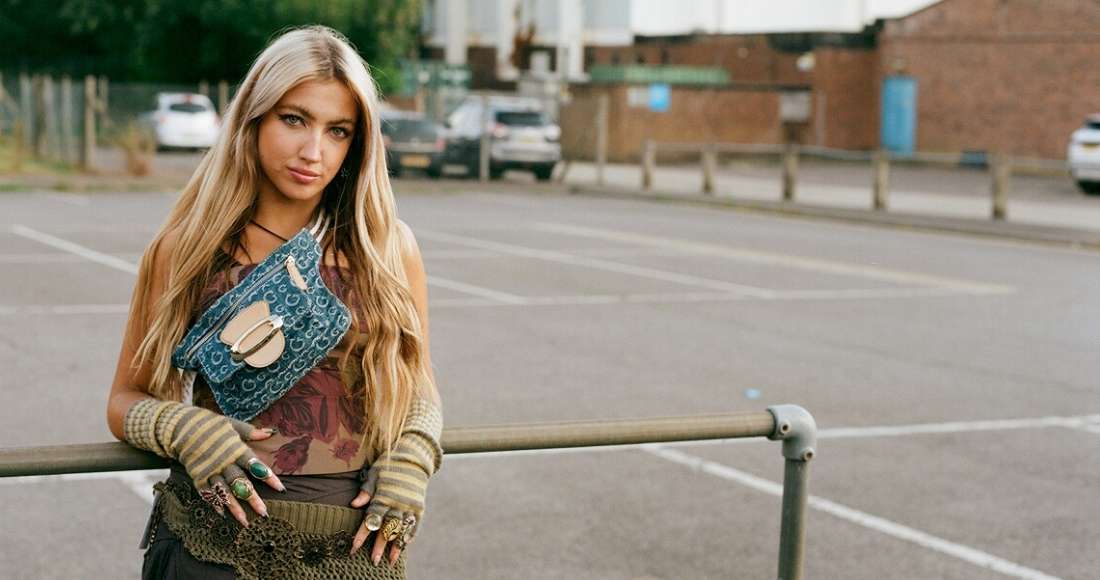
Charlotte Plank’s Breakthrough in Drum and Bass
One of the biggest moments in Plank’s early career came through her connection with the UK drum-and-bass world. Her music occupied an interesting space between traditional D&B and newer pop-oriented approaches to the genre. NME described her as an artist whose work could move between high-tempo dance anthems and offbeat pop, while also noting the influence of the wider electronic scene on her development. This combination gave her music crossover potential because it could appeal to listeners interested in club culture as well as those coming from contemporary pop.
Her collaboration with Rudimental and Vibe Chemistry on “Dancing Is Healing” became a particularly important career milestone. The song reached No. 5 on the UK Singles Chart and gave Plank exposure to a much larger audience. It also demonstrated that her voice could work effectively within a major dance production without losing the emotional quality that defined her earlier music. The success helped move her from the status of an emerging artist toward wider recognition within the British music industry.
Charlotte Plank’s Major Songs and Releases
Among Charlotte Plank’s notable songs are “Hate Me,” “Lost Boys,” “L.S.D. (Love So Damaged),” “Dancing Is Healing,” “Stargirl,” “Ellen” and other tracks that have helped define her evolving sound. “Hate Me” introduced listeners to her ability to pair emotionally charged writing with electronic production, while “Lost Boys” showed a more reflective side. “L.S.D. (Love So Damaged)” further established her connection with dance-oriented production and became one of the tracks associated with her growing reputation. Her catalog demonstrates a consistent interest in combining vulnerability with high-energy arrangements.
Her debut mixtape InHer World represented another major step in her development. The nine-song project featured collaborations involving artists such as Rudimental, Turno, Skepsis and Hybrid Minds, showing how quickly her network had expanded. Dork reported that the release followed a rapid sequence of singles, festival appearances and collaborations. Rather than presenting a single musical identity, the project reflected her interest in moving between different forms of electronic and alternative music. It helped establish Plank as an artist capable of creating a broader body of work rather than relying on one successful single.
Charlotte Plank and “Dancing Is Healing”
“Dancing Is Healing” is arguably one of the most important songs in Charlotte Plank’s early career. The track brought together Plank, Rudimental and Vibe Chemistry, placing her vocal performance inside a polished dance production. Its chart performance made the collaboration particularly significant, as it reached No. 5 on the UK Singles Chart. The song also showed how Plank’s songwriting and vocal style could fit naturally into a large-scale electronic release. Instead of abandoning her own artistic identity, she became part of a track that introduced her to listeners beyond the underground scene.
The success of “Dancing Is Healing” also helped demonstrate the commercial possibilities of Plank’s approach. Her music could retain elements of underground rave culture while still functioning within a mainstream chart environment. This ability to bridge different audiences has remained central to descriptions of her career. Dork reported that the collaboration became a top-five hit and set an important precedent for her rapidly developing career. For an emerging artist, appearing on such a successful track provided both visibility and credibility at an important stage of her development.
Charlotte Plank’s Musical Style
Charlotte Plank’s musical style is difficult to place inside one simple genre. She is commonly associated with jungle, drum and bass and indie pop, but her songs can also contain elements of electronic pop, alternative music and soulful songwriting. Live Nation describes her as a singer-songwriter-producer influenced by an eclectic range of artists and eras, from 1990s grunge and D&B to modern pop. That broad influence explains why her music can move from emotionally intimate sections into energetic dance passages.
A defining feature of her work is the contrast between emotional storytelling and club-ready production. Her songs may deal with uncertainty, relationships or personal struggles while simultaneously using fast rhythms, electronic textures and strong hooks. This contrast gives her music a distinctive atmosphere. In interviews, Plank has described her approach as combining intimacy and chaos, while other profiles have highlighted her ability to bridge underground and mainstream sounds. That balance is one of the reasons she has attracted attention from both electronic-music audiences and wider pop listeners.
Charlotte Plank’s Influences
Plank’s influences demonstrate how wide her musical interests are. She has cited or discussed artists including Fleetwood Mac, Sam Fender, The Prodigy, Orbital and Bicep, while her broader musical development also involved soul, R&B, indie and electronic music. Classic jungle has been especially important because of the genre’s ability to combine samples, breaks, bass and sounds from different musical traditions. Plank has discussed the influence of artists such as LTJ Bukem, Goldie, Shy FX and Calibre when talking about her relationship with jungle and drum and bass.
These influences help explain why her music does not sound like straightforward commercial dance pop. She is interested in atmosphere, songwriting and unusual combinations of sounds. Her appreciation for older electronic styles gives her tracks a connection to rave history, while her pop and indie influences make the music accessible to contemporary listeners. This mixture of old and new is central to her identity. Rather than copying one particular artist, Plank appears to use different influences as building blocks for her own sound.
Charlotte Plank and Loud LDN
Charlotte Plank is also associated with Loud LDN, a collective involving female and non-binary musicians from London and the surrounding area. The collective has provided an important creative community for artists working across contemporary electronic and alternative music. Plank’s involvement places her within a broader movement of emerging musicians who are helping shape the next generation of UK club and dance culture. The collective connection also reflects the collaborative nature of the modern electronic scene.
Being part of a collective can be valuable for an emerging artist because it creates opportunities for collaboration, shared audiences and creative exchange. Plank’s career already demonstrates the importance of collaboration, from her work with Rudimental to her involvement with other electronic musicians. Loud LDN adds another dimension to that story by connecting her with a community rather than presenting her career as a completely solo journey. Her development therefore reflects both individual songwriting and the collaborative culture surrounding UK dance music.
Charlotte Plank’s Live Performances and Festivals
Live performance has become an important part of Charlotte Plank’s growth as an artist. As her music gained attention, she moved from early releases toward tours, festivals and larger club appearances. Dork reported that she toured with artists including Venbee and Piri and performed across the UK during a particularly busy period in her career. She also appeared at Glastonbury, giving her an opportunity to present her music to a much broader live audience.
Her live identity fits naturally with the energy of her recordings. Drum and bass and jungle are genres built around movement and audience participation, and Plank’s music often combines those qualities with strong vocal hooks. Her performances therefore allow the contrast between emotional songwriting and energetic dance production to become more immediate. As her catalog grows, live shows are likely to remain an important part of how audiences experience her music. Her ability to move between intimate songwriting and rave energy gives her performances a distinctive foundation.
Charlotte Plank’s Collaborations
Collaboration has played a major role in Charlotte Plank’s rise. Her work with Rudimental and Vibe Chemistry on “Dancing Is Healing” gave her one of her most visible commercial moments. Her debut mixtape also included connections with artists such as Turno, Skepsis and Hybrid Minds. These collaborations show that Plank is comfortable working with producers and musicians from different areas of the electronic scene.
Collaborations are particularly useful for artists like Plank because they allow different musical worlds to meet. Her songwriting and vocals can add an emotional dimension to club productions, while producers can provide the rhythmic and sonic structures that support her voice. This relationship has helped her build a reputation as more than simply a vocalist. Her credits and interviews present her as a singer, songwriter and producer with a clear interest in the creative process behind her music.
Charlotte Plank’s Approach to Songwriting
Songwriting is central to Charlotte Plank’s artistic identity. In a 2025 feature, she described herself as a writer first and discussed keeping a large collection of ideas, lyrics, song titles and fragments in her phone. This approach suggests that her songwriting begins with observation and spontaneous ideas rather than following one fixed formula. She can start with a lyric, a thought, a melody or even a single phrase and later develop it into a complete track.
Her lyrics often focus on experiences that feel immediate and relatable. “Lost Boys,” for example, was inspired by people and situations she had encountered and reflected on the difficulty of helping someone who has not reached a point where they can help themselves. Other songs explore romantic confusion, self-doubt and youthful experiences. These subjects give her electronic productions an emotional center. Instead of using dance music only as a vehicle for celebration, Plank uses it as a way to tell stories and communicate complicated feelings.
Charlotte Plank’s Career Growth and Recognition
Charlotte Plank’s career has developed quickly compared with the traditional path of an emerging musician. She moved from recording early demos and independent material to releasing singles, collaborating with major electronic acts, appearing at festivals and putting out a full mixtape. NME’s 2023 profile presented her as a breakout artist, while Dork later described her as a rising D&B star whose career was moving at a remarkable pace. These profiles show how quickly she became part of conversations about the future of British dance music.
Her recognition is not based solely on one successful track. The combination of releases, collaborations, live appearances and her distinctive artistic identity has helped create sustained interest. Her BRIT Awards recognition also became notable when “Dancing Is Healing,” performed with Rudimental and Vibe Chemistry, received a Song of the Year nomination in 2024. The continuing interest in her music suggests that audiences are responding to the broader personality and creative direction behind her work rather than simply a temporary viral moment.

Charlotte Plank’s Music Career at a Glance
| Category | Details |
|---|---|
| Full name | Charlotte Plank |
| Nationality/background | Australian-British |
| Main base/origin | England / London music scene |
| Occupations | Singer, songwriter, producer |
| Genres | Drum and bass, jungle, indie pop, electronic pop |
| Active since | 2020–present |
| Notable collaboration | Rudimental and Vibe Chemistry |
| Major song | “Dancing Is Healing” |
| Debut mixtape | InHer World |
| Collective | Loud LDN |
| Notable influences | Fleetwood Mac, Sam Fender, The Prodigy, Orbital, Bicep and classic jungle artists |
| Major career milestone | “Dancing Is Healing” reached No. 5 on the UK Singles Chart |
The information in this table reflects published biographical and music-industry profiles of Plank.
What Makes Charlotte Plank Different?
Charlotte Plank stands out because she does not treat the boundary between pop and underground dance music as fixed. Her songs can contain the emotional directness of alternative pop while using the speed, bass and rhythmic intensity associated with drum and bass and jungle. This makes her appealing to listeners from different musical backgrounds. Someone interested in rave culture can connect with the production, while a pop listener can connect with the lyrics and vocal melodies. Her ability to occupy both spaces has become one of the defining characteristics of her career.
Another important factor is her willingness to embrace imperfection and experimentation. Plank has discussed a wide range of influences and has repeatedly emphasized the importance of writing and personal expression. Rather than following a rigid formula, she combines whatever sounds and ideas fit a particular song. This approach gives her catalog variety while still maintaining a recognizable personality. Her career illustrates how modern artists can use electronic music, songwriting, social platforms, collaborations and live culture together to create an identity that is not limited to one traditional genre.
Charlotte Plank’s Future in Music
Charlotte Plank’s future appears closely connected to the continued evolution of UK dance music. Her work has already demonstrated that drum and bass and jungle can provide a foundation for emotionally detailed songwriting. As audiences continue to move between pop, electronic and club music, artists who can comfortably operate across those categories have significant opportunities. Plank’s existing collaborations and growing live experience give her a strong foundation for developing her sound further.
The most interesting aspect of her future may be how far she chooses to push the mixture of styles that has defined her career so far. Her influences range from classic jungle and rave to indie and alternative pop, meaning there is considerable room for experimentation. She could continue developing dance-floor-focused music, explore more songwriting-led projects, or combine both approaches in new ways. Whatever direction she takes, her established identity as a writer, vocalist and producer gives her considerable creative freedom.
Conclusion
Charlotte Plank has established herself as a distinctive emerging voice in British dance music by combining energetic drum and bass with thoughtful songwriting. Her Australian-British background, exposure to club culture and wide range of musical influences have all contributed to her unusual creative perspective. From early songs such as “Hate Me” and “Lost Boys” to her successful collaboration on “Dancing Is Healing,” her career has developed through a mixture of personal songwriting, electronic production and collaboration.
What makes Plank particularly compelling is her refusal to remain inside one musical category. She can draw from classic jungle while embracing indie pop, electronic production and modern dance culture. Her work with Loud LDN, her debut mixtape InHer World, festival appearances and collaborations have all contributed to a rapidly developing career. With her strong songwriting identity and ability to connect underground energy with mainstream accessibility, Charlotte Plank represents an exciting part of the next generation of UK electronic music.
FAQs
Who is Charlotte Plank?
Charlotte Plank is an Australian-British singer, songwriter and producer associated with jungle, drum and bass and indie pop.
She gained wider attention through releases and collaborations including “Dancing Is Healing” with Rudimental and Vibe Chemistry.
What is Charlotte Plank famous for?
She is particularly known for “Dancing Is Healing,” which reached No. 5 on the UK Singles Chart.
She is also recognized for her distinctive combination of electronic dance production and emotionally direct songwriting.
What genre is Charlotte Plank?
Charlotte Plank works across drum and bass, jungle, indie pop and electronic pop.
Her music frequently combines energetic rave production with alternative and songwriting-focused influences.
Is Charlotte Plank part of Loud LDN?
Yes. Charlotte Plank is associated with Loud LDN, a collective of female and non-binary musicians based around London.
The collective reflects her connection to the wider UK electronic and alternative music community.
What is Charlotte Plank’s debut mixtape?
Her debut mixtape is titled InHer World and contains nine songs.
The project includes collaborations and reflects the blend of drum and bass, pop and alternative influences in her music.
Also Read: Sheila Reid Net Worth
Hi, I’m Lisa Curtin, a writer at magazineprime.co.uk. I’ve always been curious about people, their stories, their journeys, and what really goes on behind the spotlight. That’s why I mainly write about biographies and celebrities, digging a little deeper to bring out the details that often go unnoticed.
I enjoy keeping my writing simple, clear, and easy to read, so anyone can connect with the story without feeling overwhelmed. While biographies and celebrity content are my main focus, I also like exploring other topics like lifestyle, technology, and trending news whenever something interesting catches my attention.
For me, writing isn’t just about sharing information, it’s about telling stories in a way that feels real, relatable, and worth your time.