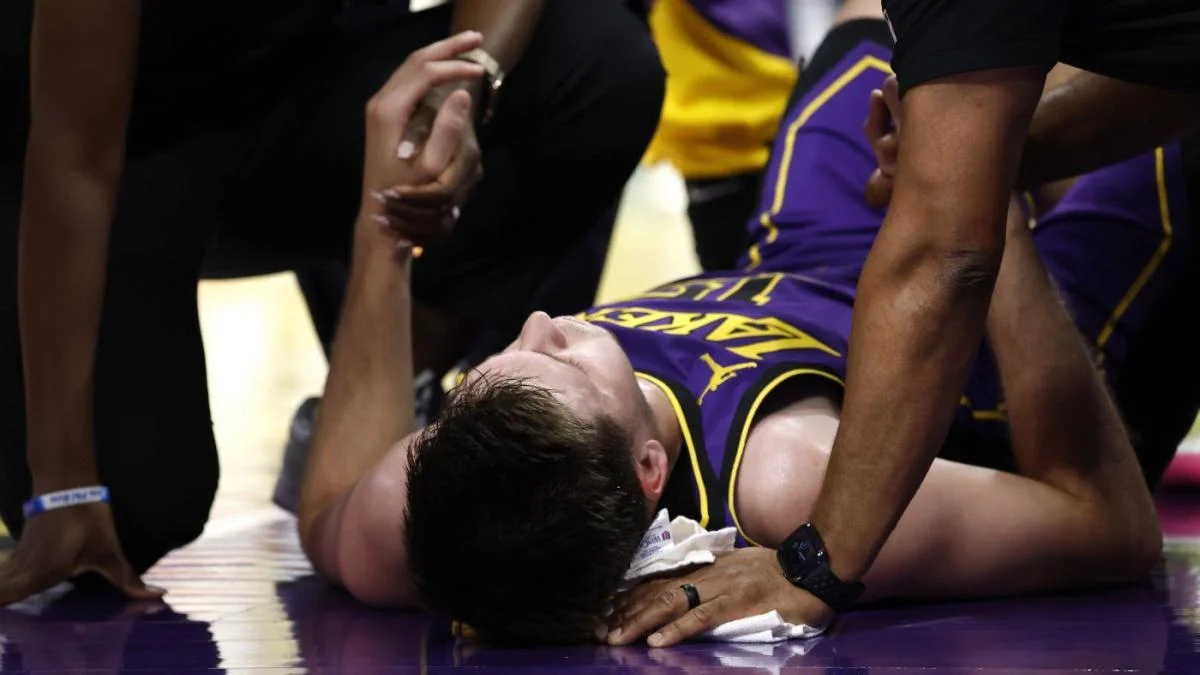
The Austin Reaves injury became a big topic because Austin Reaves is now one of the most trusted players for the Los Angeles Lakers. He is not just another basketball player on the Lakers roster. He is a smart guard who can score, create chances, handle pressure, and support stars when the game becomes difficult. For many Lakers supporters and basketball fans, his health matters because the team looks more balanced when he is available. This is why searches for Austin Reaves injury update, Austin Reaves latest injury news, Austin Reaves status, and Austin Reaves health update rise whenever he appears on the NBA injury report or misses important games.
The latest major Los Angeles Lakers injury update around Reaves focused on an Austin Reaves oblique strain, also described as strained oblique muscles by the NBA. The NBA reported that Reaves had been out since April 2, 2026, missed the final five regular-season games and the first four postseason games, and returned for Game 5 against the Houston Rockets after a nine-game absence. This article explains the full Austin Reaves injury story in easy English, including what happened, the Austin Reaves recovery timeline, the Austin Reaves return date, the Austin Reaves comeback, his Austin Reaves injury history, and what the Austin Reaves Lakers return means for the wider Lakers season.
Who Is Austin Reaves?
Austin Reaves is an American professional basketball guard who plays for the Los Angeles Lakers in the NBA. Before reaching the league, he played college basketball at Wichita State and the University of Oklahoma. He then entered the 2021 NBA as an undrafted free agent, which means no team selected him in the NBA Draft. Even with that difficult start, he worked his way into the Lakers setup through confidence, patience, and strong all-round play. His rise is a good example of how hard work can turn an overlooked player into a major part of a famous team.
Reaves became valuable because he can do many things on the court. He can act as a ball handler, a reliable scorer, and a playmaker. He helps with shooting, passing, rebounding, and defending, which gives the coaches more options during games. His connection with teammates also helps the Lakers keep better offensive flow and stronger spacing. For UK readers who follow the NBA from a different time zone, Reaves is one of those players who may not always make the loudest headlines, but his effect on the team rotation is easy to see when he is missing.
Austin Reaves Injury Update: What Happened?
The main Austin Reaves injury update centred on a basketball injury involving the side of his core. Reports described it as a Grade 2 oblique muscle strain, and the Lakers had to take a careful approach because core injuries can affect almost every part of a player’s game. Sportsnet, citing the Associated Press, reported that Reaves had a Grade 2 oblique muscle injury and was expected to miss four to six weeks after the issue. This made the Austin Reaves medical update very important because the team could not risk making the problem worse by rushing him back.
The injury came at a difficult moment for the Los Angeles Lakers. A player like Reaves helps the Lakers rotation because he can handle the ball, attack the basket, make smart passes, and defend several actions. When he became Austin Reaves sidelined, the team had to change plans quickly. The Lakers medical staff, medical staff, and team doctors needed to manage the Austin Reaves recovery process with care. That meant treatment, rest, testing, and a gradual return to basketball drills before full match action.
What Injury Did Austin Reaves Suffer?
Austin Reaves suffered an Austin Reaves muscle strain, more specifically an oblique muscle injury. The oblique muscles are found on the sides of the abdomen. They help with core stability, rotational movement, balance, and body control. In basketball, this area is used again and again because players are always turning, changing direction, jumping, passing, and absorbing contact. When this part of the body is injured, it can make simple movements feel painful and can reduce power in the upper body.
A Grade 2 oblique muscle strain usually means the damage is more than a mild pull but not the most serious type of tear. In simple terms, the injury severity was serious enough to keep him out, but it was not treated as a season-ending injury. The medical diagnosis helped the Lakers create the right plan. A core injury can affect sprinting, jumping, twisting, physical contact, defensive movement, and even the rhythm of a jump shot. That is why muscle strain recovery needs patience, because returning too early can increase the risk of reinjury risk.
| Injury Term | Simple Meaning | Why It Matters In Basketball |
|---|---|---|
| Austin Reaves oblique strain | A strain in the side core muscles | It can affect turning, shooting, and contact play |
| core muscle strain | Damage to muscles that support balance and movement | It can reduce body control and power |
| oblique muscle injury | Injury to muscles around the side of the abdomen | It can hurt during passing, defending, and rotation |
| Grade 2 strain | A moderate muscle injury | It often needs weeks of recovery and sports rehabilitation |
When Did Austin Reaves Get Injured?
The key date in the Austin Reaves injury report is April 2, 2026. The NBA reported that Reaves had been out since April 2 with strained oblique muscles and missed nine games before returning for Game 5. Reuters also reported that he sustained a Grade 2 oblique strain on April 2 during a game against the Oklahoma City Thunder, and later progressed toward on-court work as part of his return plan. This timing was important because it happened near the end of the regular season, when every game was important for rhythm, playoff seeding, and team confidence.
The Austin Reaves missed games period included the final five games of the regular season and the first four games of the postseason. That made the Lakers injury report a major talking point before each game. Fans wanted to know if he was improving, if he had started team practices, and if he had gained medical clearance. The situation also mattered because playoff games are more physical than normal games. In playoff competition, every possession is more intense, and a player returning from an injury must prove he has enough match fitness to handle the pressure.
| Date | Austin Reaves Update | Lakers Impact |
|---|---|---|
| April 2, 2026 | Reaves suffered the oblique injury | The Lakers lost a key guard late in the season |
| Early April 2026 | Reports said he could miss several weeks | The team had to make Lakers rotation changes |
| Late April 2026 | Reaves returned to practice and warmed up before games | The Austin Reaves return date became clearer |
| April 29, 2026 | Reaves returned for Game 5 against Houston | His return gave the team more depth and confidence |
Austin Reaves Recovery Timeline and Expected Return Date
The Austin Reaves recovery timeline followed the usual pattern for a moderate professional basketball injury. At first, the focus was on reducing pain, calming inflammation, and protecting the damaged area. This stage often includes rest, treatment, and careful movement. After that, the player begins controlled work to restore flexibility, strength, and confidence. For Reaves, the Austin Reaves rehabilitation process had to rebuild trust in the core because the body depends on that area during high-intensity movements.
The next stage involved physical therapy, treatment sessions, strength training, conditioning, and gradual basketball work. Reuters reported that Reaves was cleared for on-court activities and that his rehab would move through half-court work, full-court work, and scrimmage steps before a return. This kind of rehabilitation programme protects the player from setbacks. It also helps the Lakers medical staff measure whether his body can handle more Austin Reaves workload. A normal NBA recovery timeline can change from player to player, but the main aim is always the same: return only when the athlete can move, shoot, defend, and absorb contact safely.
| Recovery Stage | What Happens | Why It Matters |
|---|---|---|
| Rest and treatment | Pain and inflammation are controlled | It protects the injured muscle |
| Light movement | Flexibility and gentle motion return | It rebuilds comfort and control |
| Strength work | Core strength improves through training | It supports rotation and balance |
| Basketball work | Shooting, running, and movement drills return | It prepares the player for NBA speed |
| Full practice | The player joins full practice and contact work | It tests real game readiness |
| Medical clearance | Doctors approve game return | It confirms safer return to NBA competition |
Has Austin Reaves Returned to the Lakers Lineup?
Yes, the major update is that Austin Reaves returned to the Austin Reaves Lakers lineup for Game 5 against the Houston Rockets. The NBA said he returned from a nine-game absence when the Los Angeles Lakers tried to finish their first-round playoff series. This was an important Austin Reaves Lakers return because the team had been playing without one of its most useful guards. His return did not only add points. It also gave the Lakers another trusted decision-maker on the floor.
When a player returns from an oblique muscle strain, the first game back is often managed carefully. This is why Austin Reaves playing time, playing time, managed minutes, and normal workload become important terms. Coaches may not immediately use a player for heavy minutes after a core injury. They first want to see movement, balance, contact response, and game rhythm. Once the player looks comfortable, his minutes can slowly rise until he returns to his usual role in the Austin Reaves Lakers rotation.
How Austin Reaves’ Injury Affected the Los Angeles Lakers
The Austin Reaves injury affected the Los Angeles Lakers because he gives the team a mix of scoring, creation, control, and calm decision-making. When he was out, the Lakers had to change their team rotation and make a lineup adjustment. Other players needed to handle more possessions, take more shots, and defend tougher matchups. This changed the Lakers offensive flow, because Reaves is often used to connect plays and keep the ball moving when the defence focuses on star players.
His absence also affected Lakers defensive flexibility. Reaves is not the strongest defender in the league, but he understands positioning and can compete in different matchups. Without him, the Lakers rotation changes became more difficult because the team had fewer two-way options. His return helped improve offensive flow, spacing, and defensive flexibility. It also gave the team another player who could make simple but important plays late in games, which matters a lot in close playoff moments and during Lakers upcoming games.
| Area Affected | What Changed Without Reaves | What Improved After Return |
|---|---|---|
| Ball handling | More pressure on other guards | Reaves added control and support |
| Scoring | Fewer reliable shot creators | The Lakers gained another scorer |
| Passing | Fewer smart connecting plays | Ball movement became smoother |
| Defence | Less guard flexibility | Matchup options improved |
| Rotation | More minutes for others | The bench and starters became more balanced |
Austin Reaves Injury History and Previous Health Concerns
The Austin Reaves injury history does not show a long record of major career-changing injuries, but like many NBA players, he has dealt with physical problems during a demanding season. Bleacher Report noted that Reaves had managed multiple injuries during the 2025–26 campaign and had previously missed time with calf issues. This matters because the NBA schedule is long, travel-heavy, and physically demanding. An 82-game season can wear down even a well-conditioned player, especially when his role continues to grow.
The most important point is that the Lakers medical staff must balance performance and protection. Reaves is valuable, but the team cannot overload him after an injury. Careful monitoring of Austin Reaves workload is important because small problems can become bigger if ignored. A smart recovery plan helps him stay available for the Lakers season, especially when Lakers playoff hopes depend on having key players healthy. For a player who contributes in many ways, long-term health is just as important as one strong game.

What Austin Reaves’ Return Means for the Lakers’ Season
The Austin Reaves comeback is important because he gives the Lakers more balance. He can score without forcing the game, pass when defenders collapse, and make smart decisions under pressure. His return also supports the team’s spacing, because defenders must respect his shot and his drive. That opens more space for teammates and makes the attack harder to predict. For the Los Angeles Lakers, having Reaves back means the offence can become less dependent on one or two players.
His return also helps the Lakers roster feel deeper. A healthy Reaves can reduce pressure on other guards and give the coaching staff more lineup choices. He can play with starters or help the second unit. That flexibility is one reason his injury received so much attention from fans, basketball fans, and Lakers supporters. If he stays healthy, the Austin Reaves health update will become less about concern and more about rhythm, confidence, and whether he can return fully to his best form.
Conclusion
The Austin Reaves injury was a major story because Austin Reaves has become an important part of the Los Angeles Lakers. His Austin Reaves oblique strain kept him out during a crucial part of the season, and the team had to manage the situation carefully. The injury affected the Lakers lineup, the Lakers rotation, and the team’s balance on both ends of the court. It also showed why one player’s health can change the feel of an entire team.
The good news for Lakers fans is that Reaves completed the needed recovery steps and made his return after missing nine games. His Austin Reaves recovery process involved rest, physical therapy, strength work, basketball activity, and final medical clearance. His return gave the Lakers more scoring, passing, and control at a key time. Going forward, the main things to watch are his minutes, movement, confidence, and whether he can handle a full normal workload without setbacks.
FAQs
What is Austin Reaves’ injury?
Austin Reaves suffered a Grade 2 oblique strain, a core muscle injury that affected his movement and availability.
The injury happened on April 2, 2026, during a game against the Oklahoma City Thunder.
Will Austin Reaves be back for game 5?
Yes, Austin Reaves was cleared and returned for Game 5 against the Houston Rockets on April 29, 2026.
His return came after missing nine games because of the oblique injury.
Is Austin Reaves out for the playoffs?
No, Austin Reaves was not out for the full playoffs.
He missed the first four postseason games but returned to the Lakers lineup for Game 5.
Why hasn’t Austin Reaves been playing?
Austin Reaves had not been playing because he was recovering from an oblique muscle strain.
The Lakers waited for medical clearance before bringing him back to avoid reinjury.
Is Irving out for the season?
Yes, Kyrie Irving was ruled out for the rest of the 2025–26 NBA season while recovering from his ACL injury.
NBA reported that he is targeting a return for the 2026–27 season.
Also Read: Does Matthew Robertson Have a New Partner

Hi, I’m Lisa Curtin, a writer at magazineprime.co.uk. I’ve always been curious about people, their stories, their journeys, and what really goes on behind the spotlight. That’s why I mainly write about biographies and celebrities, digging a little deeper to bring out the details that often go unnoticed.
I enjoy keeping my writing simple, clear, and easy to read, so anyone can connect with the story without feeling overwhelmed. While biographies and celebrity content are my main focus, I also like exploring other topics like lifestyle, technology, and trending news whenever something interesting catches my attention.
For me, writing isn’t just about sharing information, it’s about telling stories in a way that feels real, relatable, and worth your time.